

Product Categories
SEARCH WHAT YOU WANT
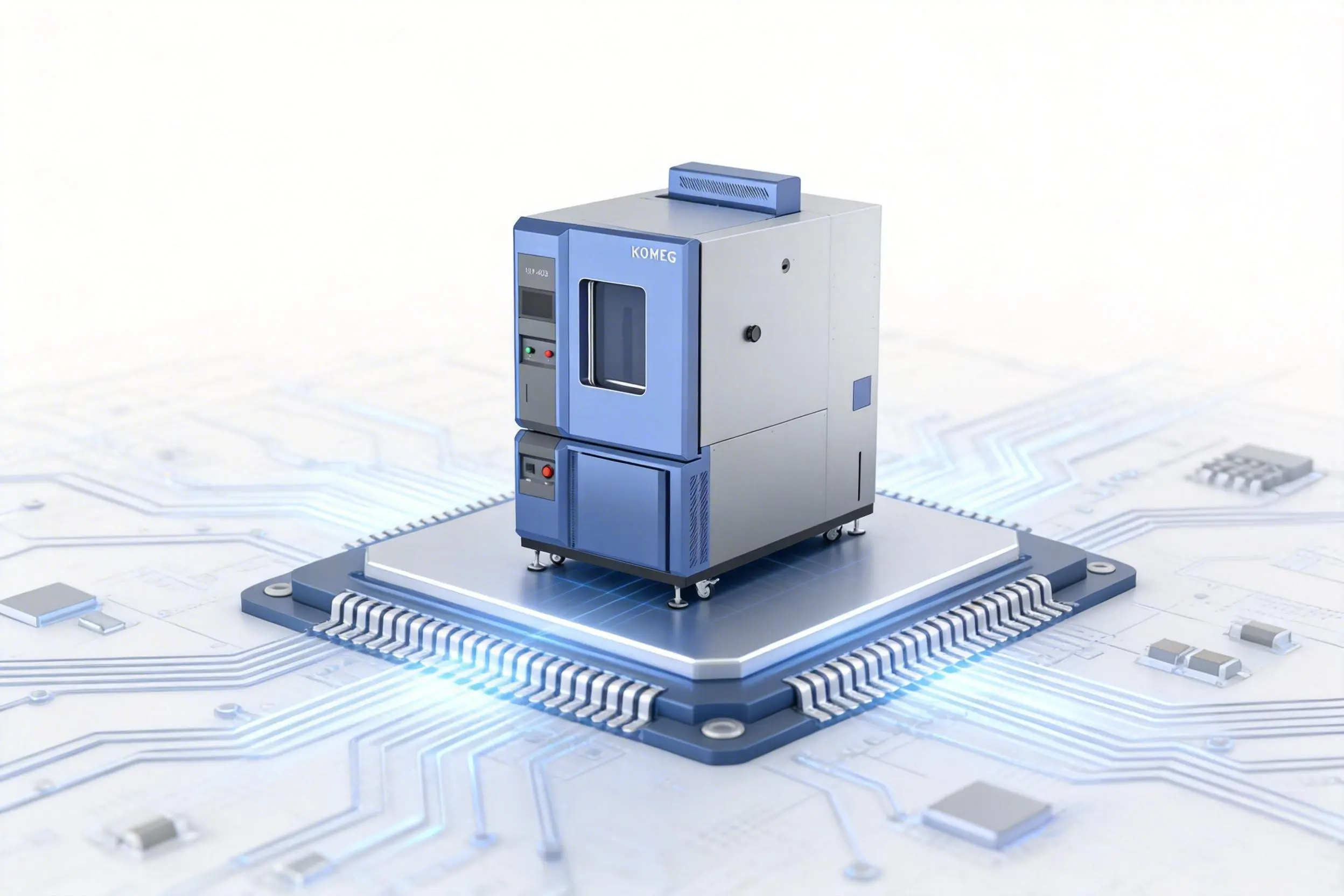
As electronic products become increasingly sophisticated, ensuring their reliability under various environmental conditions has become a critical part of product development. From smartphones and automotive electronics to industrial controllers, semiconductor devices, and aerospace systems, every electronic product must withstand temperature fluctuations, humidity, vibration, pressure changes, and other environmental stresses throughout its lifecycle.
Environmental testing allows manufacturers to simulate real-world operating and storage conditions in a controlled laboratory environment. By identifying potential failures before products reach the market, these tests help improve reliability, reduce warranty costs, and ensure compliance with international standards.
Below are the most common environmental tests performed on electronic products.
Temperature testing is one of the most fundamental environmental tests for electronic products. Electronic components naturally expand and contract as temperatures change. Over time, repeated thermal stress can lead to solder joint fatigue, cracked PCB traces, package deformation, or even complete component failure.
During testing, products are exposed to both high and low temperatures to verify that they continue to function correctly under extreme conditions.
Typical applications include:
Typical temperature tests include:
Many manufacturers perform these tests according to IEC 60068-2-1, IEC 60068-2-2, and MIL-STD-810 to validate long-term reliability.
For laboratories requiring stable temperature control and excellent uniformity, programmable temperature and humidity chambers—such as those offered by KOMEG—provide repeatable testing conditions for both R&D and production validation.
Moisture is one of the leading causes of electronic product failures. High humidity can accelerate corrosion, reduce insulation resistance, cause condensation, and damage sensitive electronic assemblies.
Humidity testing evaluates whether a product can maintain normal operation after prolonged exposure to warm, humid environments.
Common failure mechanisms include:
Humidity testing is widely used for:
Common standards include:
Modern temperature and humidity chambers allow precise control of both temperature and relative humidity, enabling engineers to accurately reproduce challenging climatic conditions.
Electronic devices used in aircraft, drones, mountainous regions, or products transported by air must continue operating under reduced atmospheric pressure.
Altitude testing simulates these conditions by lowering the air pressure inside a sealed test chamber while maintaining precise temperature control.
This test helps engineers evaluate:
Industries that commonly require altitude testing include:
Relevant standards include:
Integrated altitude test chambers, such as those developed by KOMEG, combine temperature and low-pressure simulation in a single system, enabling comprehensive environmental verification for high-altitude applications.
Unlike temperature cycling, thermal shock testing exposes products to extremely rapid transitions between hot and cold environments—often within seconds.
This accelerated test places significant stress on materials with different coefficients of thermal expansion, making it highly effective for uncovering hidden manufacturing defects.
Typical failures detected include:
Thermal shock testing is essential for:
The most widely referenced standards include JEDEC JESD22 and MIL-STD-883.
Electronic products intended for coastal, marine, or industrial environments must resist corrosion caused by salt-laden air.
Salt spray testing accelerates the corrosion process by exposing products to a fine mist of salt solution under controlled conditions.
Engineers evaluate:
Industries commonly using this test include:
Testing is typically conducted in accordance with ASTM B117 and IEC 60068-2-11.
Electronic equipment experiences continuous vibration during transportation, installation, and operation. Over time, vibration can loosen fasteners, damage solder joints, or disconnect electrical connectors.
Vibration testing simulates these mechanical stresses to ensure long-term structural integrity.
Common applications include:
Testing often follows standards such as IEC 60068-2-6 and MIL-STD-810.
Mechanical shock testing evaluates a product's ability to withstand sudden impacts caused by accidental drops, handling, transportation, or operational shocks.
The test measures whether the product can maintain functionality after experiencing abrupt acceleration forces.
Products commonly tested include:
Common standards include IEC 60068-2-27 and MIL-STD-810.
Many electronic products are designed for outdoor or industrial use, where they are exposed to dust, rain, or water jets.
Ingress Protection (IP) testing verifies the effectiveness of product enclosures against solid particles and liquids.
Typical tests include:
These tests help manufacturers achieve IP ratings such as IP54, IP65, IP67, and IP68 in accordance with IEC 60529.
Outdoor electronic products are continuously exposed to sunlight, temperature fluctuations, and moisture, all of which can degrade materials over time.
UV weathering tests accelerate years of outdoor exposure within weeks or months.
Engineers evaluate:
These tests are widely used for outdoor displays, EV charging stations, photovoltaic systems, and telecommunications equipment.
Modern electronic products rarely encounter only one environmental stress at a time. In real-world applications, temperature, humidity, vibration, and pressure often occur simultaneously.
Combined environmental testing provides a more realistic assessment of product reliability by exposing devices to multiple stresses in a single test sequence.
Examples include:
This approach is increasingly adopted in industries such as automotive electronics, aerospace, defense, and semiconductor manufacturing.
Manufacturers often rely on customizable environmental simulation systems to meet these complex testing requirements. Companies like KOMEG offer a broad portfolio of environmental test chambers—including temperature and humidity chambers, thermal shock chambers, altitude test chambers, rapid temperature change chambers, HAST chambers, and walk-in chambers—that can be configured to support diverse testing applications without locking users into a one-size-fits-all solution.
Product Categories
Recent Posts
Copyright © 2026 GUANGDONG KOMEG INDUSTRIAL CO., LTD